Shah Maruf
Introduction
The Agreement under the United Nations Convention on the Law of the Sea on the Conservation and Sustainable Use of Marine Biological Diversity of Areas beyond National Jurisdiction (BBNJ Agreement) came into force on 17 January 2026. Applicable in areas beyond national jurisdiction (ABNJ)—meaning the high seas and the Area—the Agreement has two core objectives: conservation of marine biological diversity situated in ABNJ, and its sustainable use (art. 2). Adopted in 2023, it is the third implementing agreement under the United Nations Convention on the Law of the Sea (UNCLOS).
While the Agreement does not directly address energy, it requires States to ensure that their activities—which would include offshore energy activities—do not adversely affect the marine biodiversity in ABNJ. It introduces obligations that indirectly shape offshore energy law, from environmental impact assessment (EIA) and spatial management to capacity building and technology transfer.
This blog examines the implications of the BBNJ Agreement for the energy sector. It firstly discusses how the Agreement is relevant for the energy sector (Section I) and then discusses some specific provisions of the Agreement that may apply to the energy sector, specifically environmental due diligence (Section II), and capacity building and technology transfer (Section III).
I. The BBNJ Agreement’s Relevance to the Energy Sector
Currently, most energy projects—both renewables and fossil fuels—are situated within the national jurisdiction of States. Covering nearly 64% of the marine areas, however, ABNJ can offer significant potential for energy markets, especially renewables. There are three main reasons why the BBNJ Agreement is relevant for the energy sector.
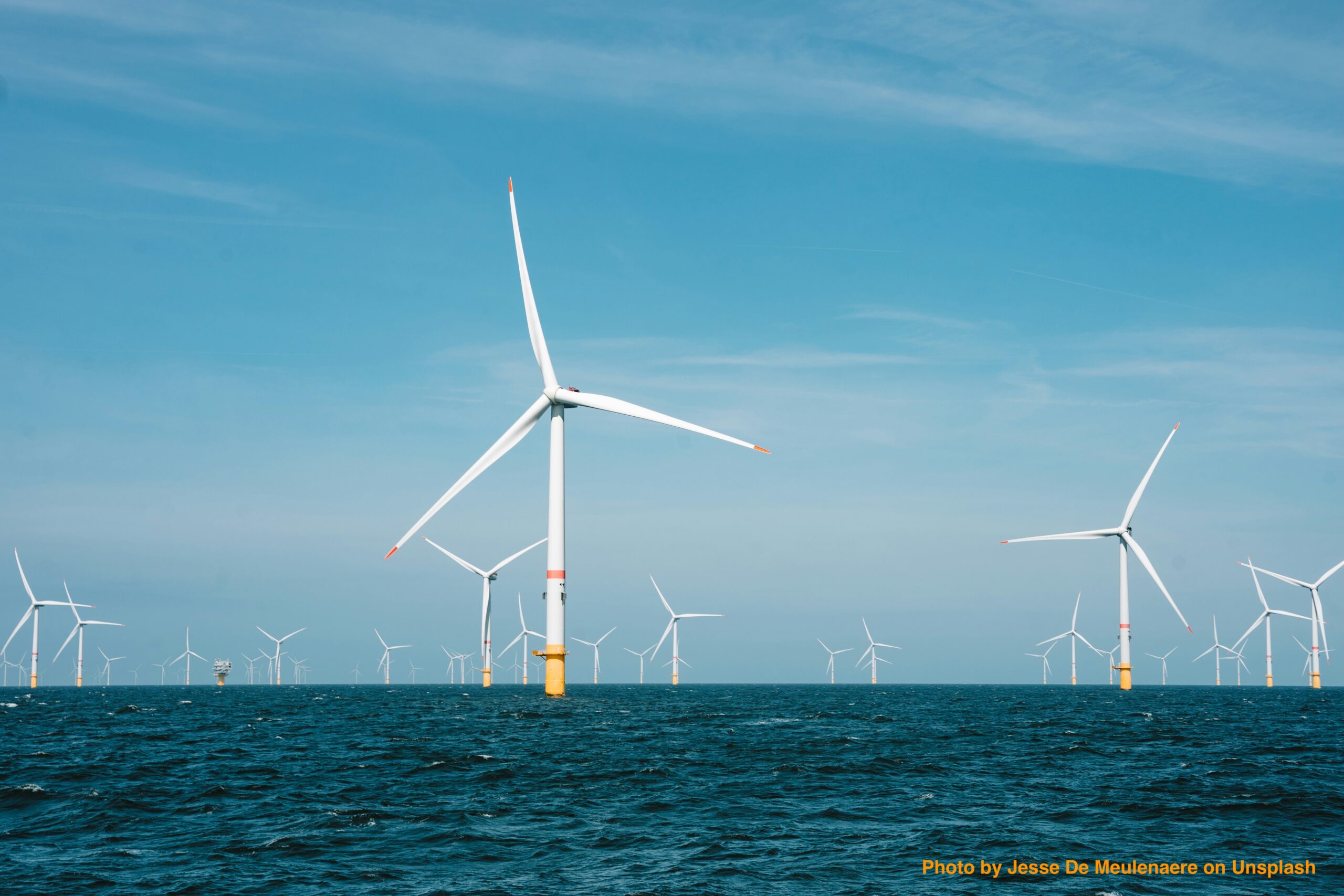
First, according to article 87 of the UNCLOS, ‘[t]he high seas are open to all States, whether coastal or land-locked’ and they have the ‘freedom to construct artificial islands and other installations permitted under international law’ (emphasis added). While these freedoms should be exercised with due regard for the interests of other States, it may be argued that, within the scope of this provision, a State could construct floating wind or solar farms in the high seas (‘other installations’) for generating electricity, subject to compliance with UNCLOS and other applicable rules of international law. States are now building such wind farms, though within their EEZ, in depths where fixed-foundation turbines are not feasible. The electricity produced from these farms can be transmitted to the land, if feasible, or may be used to power marine vessels or other marine installations. The Hywind Tampen, for example, is a floating offshore wind farm, located 140 km off the Norwegian coast in 260-300 meters deep water, owned by the Norwegian state-owned energy company Equinor. With a system capacity of 94.6 MW, the wind farm supplies five offshore oil and gas platforms, fulfilling 35% of their annual electricity demand.
Depending on the technological advancements, such floating wind farms may in the future be deployed further and deeper offshore, potentially extending beyond areas of national jurisdiction, although no such projects currently exist in ABNJ. Current estimates suggest that it is possible to operate such activities in water depths of 800 to 1250 meters, which is expected to rise as technology advances. There are two other reasons which will play a role in the advancement of floating wind projects. First, the large-scale expansion of wind projects requires significant space (both actual space for placing turbines as well as surrounding safety zones) and most States at any given time will have little to no space for expansion within their national jurisdiction, either onshore or offshore. Second, landlocked States that do not have maritime areas under their national jurisdiction, may in principle seek to undertake offshore energy developments in ABNJ, although such possibilities remain largely prospective.
Though the possibility is currently slim, if technology advances to overcome the problems with strong wind speed and large waves, floating solar farms may also move towards the high seas, especially in equatorial regions, as solar power in the high seas is more consistent and stronger due to reduced shading and cloud cover.
The second reason is that, apart from direct renewable energy production, the BBNJ Agreement is relevant for energy markets because ABNJ contain mineral resources critical for the renewable energy sector. ABNJ are rich in polymetallic nodules (PNS), polymetallic sulphides (PMS) and cobalt-rich ferromanganese crusts (CFC), containing critical metals such as nickel, cobalt, and copper, which are essential for renewable energy technologies, such as batteries, wind turbines, and solar photovoltaics. Their extraction from the deep seabed is crucial for the global energy transition and will be subject to additional environmental obligations under the BBNJ Agreement, alongside the existing regulatory framework of the International Seabed Authority (ISA), which has primary regulatory authority over activities in the Area under Part XI of UNCLOS, as reinforced by Article 5(2) of the BBNJ Agreement and its non-undermining principle.
Finally, the BBNJ Agreement may also be relevant for the activities that are done within a State’s national jurisdiction if ‘the activit[ies] may cause substantial pollution of or significant and harmful changes to the marine environment in areas beyond national jurisdiction’ (art. 28(1), emphasis added). This is particularly the case in oil or gas exploitation in a State’s exclusive economic zone or continental shelf, which might affect the adjacent ABNJ marine environment, either from accidental spills or operational activities. Besides, in future, if States want to exploit hydrocarbon reserves (oil, gas, or methane hydrates) that might be discovered in ABNJ, this Agreement will be more directly applicable.
In this context, if any State wants to undertake energy projects (such as floating wind farms) or exploit mineral resources (such as PMN, PMS or CFC) in ABNJ or to exploit the energy sources (such as oil or gas) in areas adjacent ABNJ, the Agreement will require those States to ensure that such activities do not cause significant harm to the marine environment in ABNJ.
II. Stricter Environmental Due Diligence for Energy Activities
Before authorizing any energy activities, a State is required to assess ‘the potential impacts on the marine environment of planned activities’—irrespective of whether such activities take place within or beyond its national jurisdiction (art. 28(1)). The Agreement requires a three-stage assessment for the purpose: pre-EIA stage, EIA stage, and post-EIA stage.
In the pre-EIA stage, the State has to undertake a screening process ‘[w]hen a planned activity may have more than a minor or transitory effect on the marine environment, or the effects of the activity are unknown or poorly understood’ (art. 30(1)). The main purpose of this process is to determine whether the State ‘has reasonable grounds for believing that the planned activity may cause substantial pollution of or significant and harmful changes to the marine environment’ (art. 30(1)). Such a screening process shall take into account several factors, including the purpose, location, intensity and duration of the planned activity, its potential (cumulative) impacts, nature of the technology used in it, and whether there is any alternative to the planned activity (art. 30(2)). For example, when a State wants to undertake a floating wind project, it should consider whether the area is biodiversity-rich, what specific activities will be done in the area and for how long. The consideration of the location is further required by area-based management tools (ABMTs), including marine protected areas (MPAs) under the Agreement, where certain activities may be prohibited or more strictly regulated than others (see Part III of the BBNJ Agreement).
In the second stage, if the State determines that the activities may cause such harm, an EIA shall be conducted ‘using the best available science and scientific information and, where available, relevant traditional knowledge of Indigenous Peoples and local communities’. When assessing impacts, it shall consider ‘key environmental and any associated impacts, such as economic, social, cultural and human health impacts, including potential cumulative impacts and impacts in areas within national jurisdiction, as well as alternatives to the planned activity’ (art. 31(1)).
In this stage, thus, the State is required to take into account not only direct harms from the activities but also their indirect or cumulative impacts. Such cumulative effects may result from the combined influence of multiple wind farms or their overlap with other offshore activities such as shipping, fishing, and seabed mining. For example, a floating wind farm alone may not create disturbance to the marine biodiversity, but when it is added to some other farms in adjacent areas, it might create noise and vibrations that negatively affect marine species’ behaviour. The State concerned, therefore, must consider these impacts and, based on such consideration, should decide whether to proceed with the proposed activity. If the State is uncertain about the impacts of the activities, it shall be guided by the ‘precautionary approach’ and should not proceed with the work (art. 7).
In the third stage (post-EIA), after the authorization of the proposed activities, the State is required to ‘monitor the environmental and any associated impacts’ of such activities and to observe whether any conditions subject to which the activities were authorized have been breached (art. 35). For example, in the initial stage, it has been determined that the activities in question will result in ‘X’ level of damage due to their operation and there is no possibility of harms in ABNJ. However, at a later stage, it has been noticed that the activities are in fact resulting in ‘Y’ level of damage affecting the ABNJ biodiversity and/or other national jurisdictions. Thus, if it later finds through monitoring that they have started creating significant negative effects, the State must review and, where necessary, adapt its management measures to prevent significant harm, consistent with its monitoring obligations under Article 35, even if no negative environmental impacts were found during the authorization of the activities.
The Scientific and Technical Body (STB) shall develop standards and guidelines to be followed in such screening, EIA or monitoring processes (art. 38). The States are also given the freedom to conduct EIAs under their ‘national process’. This may imply that the States, when complying with the national standards, may arbitrarily decide whether to proceed with a project. The Agreement, however, establishes a Clearing-House Mechanism (CHM), consisting primarily of an open-access platform which shall ‘[s]erve as a centralized platform to enable Parties to access, provide and disseminate information with respect to activities’ (art. 51). All activities relating to the EIA process—screening reports, draft EIA report, final EIA report, final decision documents, and monitoring reports, etc.—shall be made publicly available through the CHM. In each of these stages, other States and the STB will be able to provide comments, and the State concerned shall be bound to respond to and consider those comments, all of which shall also be made available through the CHM (see arts. 28, 29, 31-34, 36, 37).
These provisions ensure that a State cannot subjectively assess the environmental impacts of its planned activity and unilaterally proceed to authorize it. This is significant because powerful States might otherwise unilaterally proceed with such activities or withhold decision-related information from public scrutiny. It will also act as a source of insights for other States that are considering undertaking similar projects, by providing information as to the standards and practices of activities in ABNJ.
III. Capacity Building and Technology Transfer: A Step Toward Cleaner Energy
The BBNJ Agreement contains a dedicated part (Part V) for capacity-building and technology transfer with a view to, inter alia, assisting (developing) States in implementing the provisions of the Agreement and enabling their participation in the activities (art. 40). This Part of the Agreement builds on and echoes articles 144, 148, 150, and Part XIV of the UNCLOS. It also establishes a separate committee, named ‘Capacity-Building and Transfer of Marine Technology Committee’, to oversee the implementation of the provisions of this Part (art. 46).
It requires that States cooperate to assist parties in achieving the objectives of the Agreement, including in conducting EIA, through capacity-building and the development and transfer of marine science and marine technology. These measures enhance human, institutional, and technical capabilities. They include sharing information and research outcomes, strengthening infrastructure and regulatory frameworks, promoting education and training, and exchanging technology for monitoring, control and surveillance of activities (art. 44; Annex II).
States may cooperate directly or through other relevant frameworks or bodies for this purpose, giving ‘full recognition to the special requirements of developing States Parties’, in particular the least developed countries (LDCs), landlocked developing countries, and geographically disadvantaged States, among others (art. 41). It also requires that the technology transfer be made ‘on fair and most favourable terms, including on concessional and preferential terms’ (art. 43). The technologies transferred ‘shall be appropriate, relevant and, to the extent possible, reliable, affordable, up to date, environmentally sound and available in an accessible form for developing States Parties’ (art. 43(5)).
These provisions on technology transfer and capacity building are crucial as they enable disadvantaged States’ participation in the activities in ABNJ, which reinforces the policy enumerated in article 150 of the UNCLOS, requiring ‘the enhancement of opportunities for all States Parties’ and ‘the prevention of monopolization of activities in the Area’. Because, without access to scientific data and technical expertise, many States lack the ability to explore the potential of the marine resources, to conduct EIAs, or to develop marine renewable energy.
Floating wind farms, for instance, are mostly concentrated in a few industrialized countries, creating a technological divide that limits renewable energy expansion in the Global South. Technology transfer in this context may enable developing States to access the engineering designs and maintenance know-how needed to deploy turbines in deep waters safely and efficiently. In hydrocarbon exploitation in national jurisdictions, it enables States without advanced equipment to conduct EIAs and related activities in a manner that avoids adverse effects on the marine environment in ABNJ, e.g., providing support for safe drilling or preventing oil spills. Thus, the capacity building and technology transfer under the BBNJ Agreement may help ensure that the global shift toward offshore energy and resources does not replicate existing technological and regulatory inequalities.
Looking Forward
Harnessing offshore energy was once a matter of science fiction, but it is now a reality. Given the adverse impacts of climate change and the role of fossil fuels in driving it, offshore renewables have become a necessity. ABNJ offers enormous potential for this in two ways. Depending on the advancement of technology, it can support direct renewable electricity production from offshore (floating) wind and solar farms. Besides, it may also help the renewable energy sector by supplying the critical minerals needed for renewable energy technologies.
The BBNJ Agreement’s requirement for stricter EIA, along with the ABMTs, strikes a balance between the environmental aspects and the economic aspects of energy production discussed above. Besides, its transparency mechanism and provisions for capacity building and technology transfer will promote the conservation and sustainable use of marine biodiversity by ensuring broader participation of all States on the one hand, while helping bridge the North–South gap and ensuring a more equitable energy transition on the other. Above all, this Agreement reflects a normative shift in ocean governance, from a resource exploitation paradigm toward an ecosystem-based framework grounded in intergenerational environmental stewardship.
Shah Maruf is a Lecturer in Law at East West University. He is also an Executive Member of the Bangladesh Centre for Ocean Law and Policy (BCOLP) and the Editor of the BCOLP Blog. He can be reached at shah.ahmad@ewubd.edu.