Shah Maruf and Mehenaj Binte Amin
1. Introduction
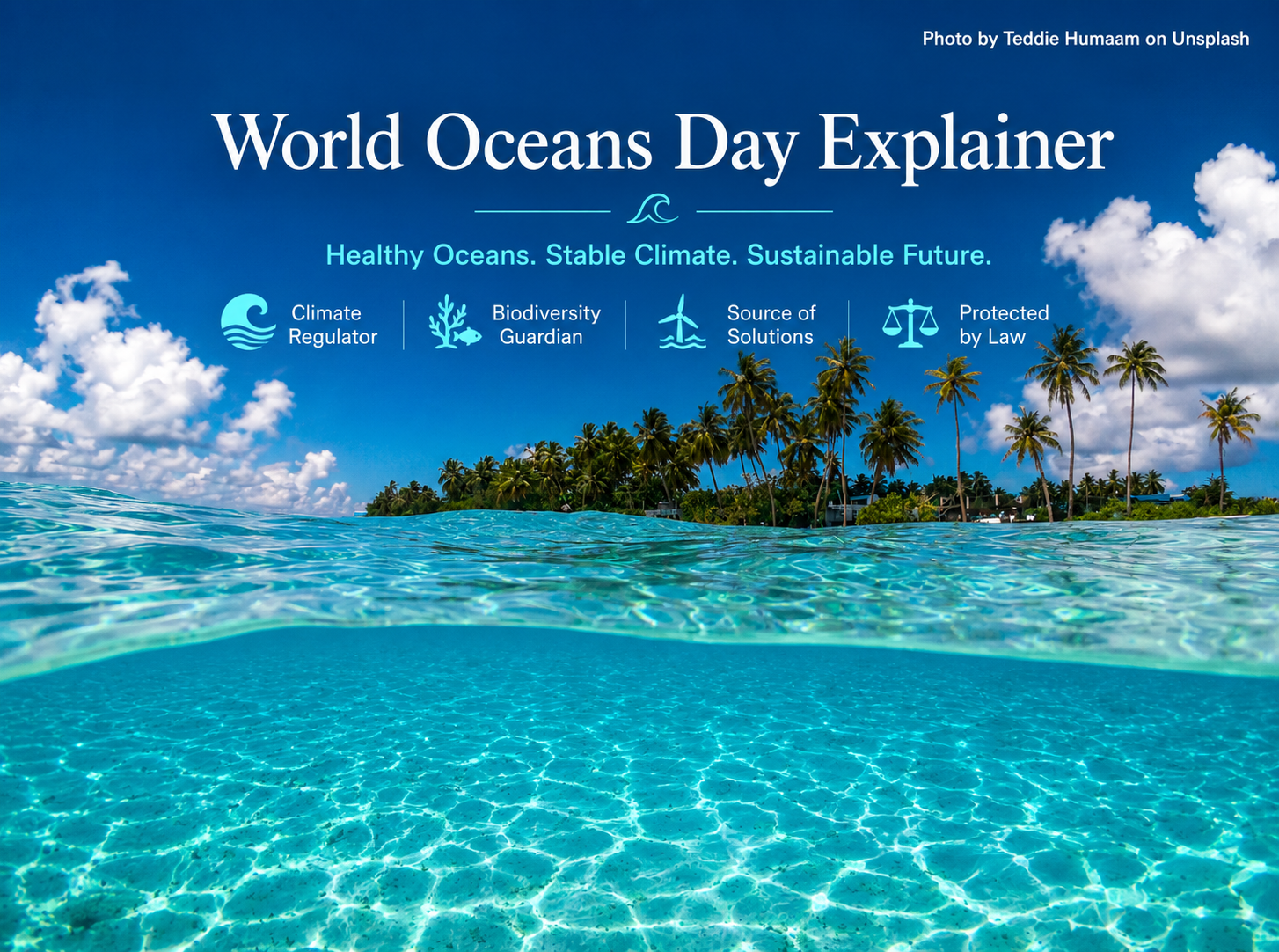
In an increasingly warming world threatened by climate change, the ocean provides critical supports for the planet and its biodiversity. Covering more than 70% of the Earth’s surface, ‘the ocean ‘generates 50 percent of the oxygen we need, absorbs 30 percent of all carbon dioxide emissions and captures 90 percent of the excess heat generated by these emissions’.
This explainer blog shows how the ocean contributes to our fight against climate change. It shows that the ocean directly contributes to the mitigation of climate change through its role as a carbon sink and heat absorber; and indirectly, by offering ocean-based sustainable, low-carbon alternatives, such as offshore renewable energy (part 2). The blog then briefly discusses the international regulatory framework for protecting the ocean (part 3) and concludes with a call for a global paradigm shift to reimagine the ocean’s role and our duties towards them.
2. The Blue Solution: Why Does the Ocean Matter for Climate Action?
The ocean contributes to regulating climate change in two fundamental ways: it buffers carbon dioxide (CO₂)—one of the primary drivers of climate change—and absorbs excessive heat.
The Ocean acts as the biggest reservoir of carbon, storing about 28 times more carbon (38,000 billion tons) than land and atmosphere stores together. The ocean ‘carbon reservoir is so large that all anthropogenic carbon in the atmosphere constitutes less than 1 percent of the oceanic carbon reservoir’. Through biological and physical processes, the ocean transfer carbon from surface waters into the deep ocean, where it may remain stored for centuries or even millennia. Not only that, the same biological process produces oxygen: the ocean produces around half of the Earth’s oxygen, the majority of which comes from oceanic plankton (phytoplankton (plants) and zooplankton (animals)).
Thus, the ocean offers climate solutions like marine carbon dioxide removal (mCDR) and carbon capture and storage (CCS). The mCDR solution focuses on enhancing the ocean’s natural ability to absorb and store carbon, for example, through ocean alkalinity enhancement or seaweed cultivation. As the ocean covers over 70% of the Earth’s surface and already act as our largest carbon sink, it offers massive storage potential. The marine CCS, on the other hand, involves capturing greenhouse gases from the atmosphere and then transporting and storing them below the seabed. While the CCS may not be considered a complete alternative to decreasing GHG emissions, it still offers a potential pathway to save the atmosphere from excessive emissions.
Besides, the ocean functions as Earth’s built-in air conditioner. It absorbs approximately 90% of the excess planetary heat generated by global warming. Water has an exceptionally high heat-absorbing capacity. It absorbs enormous amounts of energy without getting warm rapidly. Wind and currents then push that heat from the surface downward into deeper layers, spreading it throughout the ocean’s entire depth rather than letting it accumulate at the top. Without the ocean’s thermal regulation, Earth’s average surface temperature would be significantly higher.
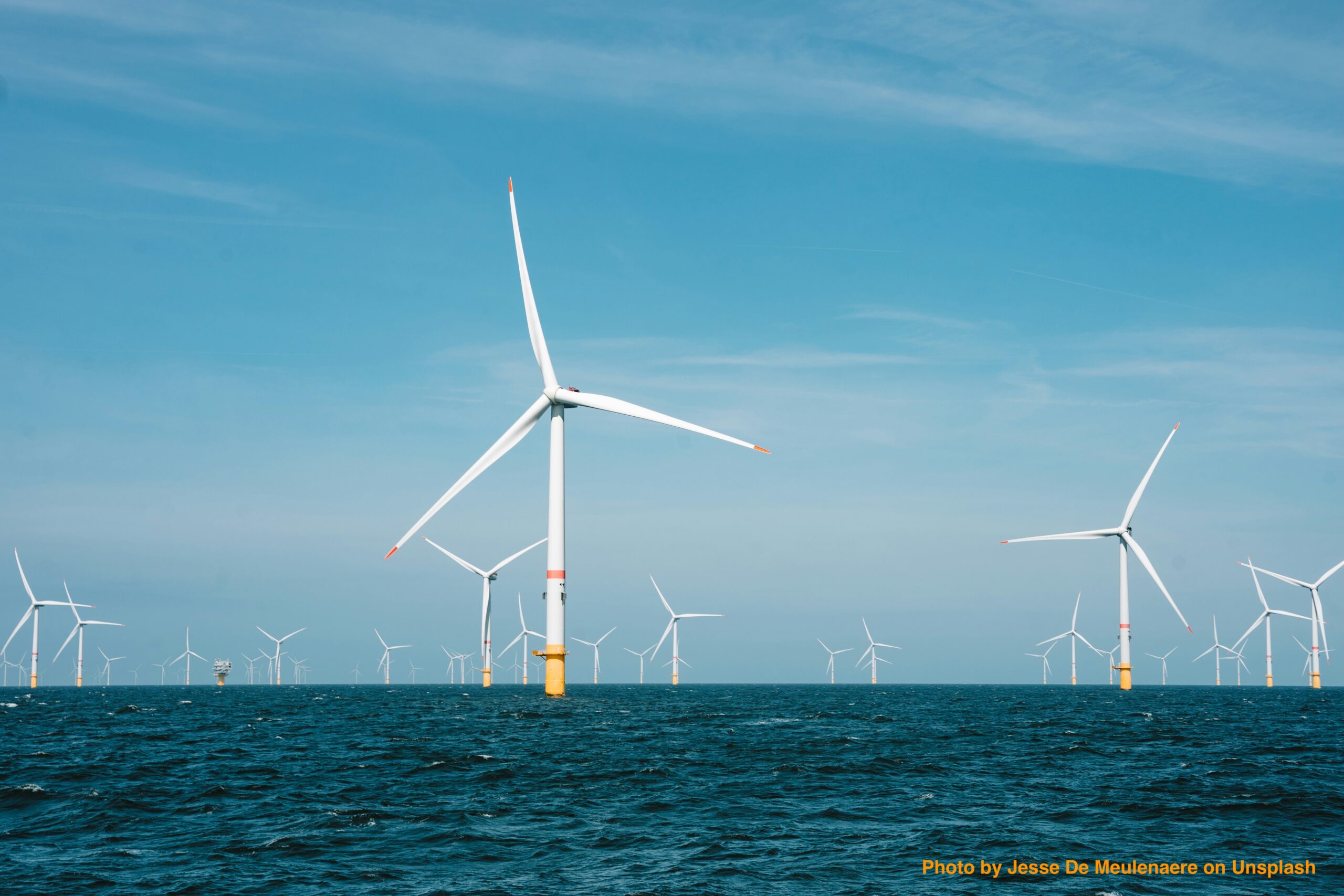
Apart from being a carbon sink and heat absorber, the ocean offers several sustainable and low-carbon alternatives to our usual carbon-heavy activities. The Ocean provides a vast opportunity for harnessing offshore renewable energy, including wind, tidal, and solar energy—which can have significant potential for mitigating climate change (3.20–4.47 Gt CO₂e per year in 2050). As wind speeds are stronger and more consistent over water than on land, offshore turbines can generate significantly more electricity compared to land turbines. Similarly, offshore solar energy—usually through floating photovoltaic (PV) systems—offers higher power-generation potential, cooler operational temperatures for solar panels, and the ability to integrate seamlessly with existing offshore infrastructure like wind farms. Offshore wave and tidal energy also provide similar potentials.
These ocean-based solutions can be alternatives that contribute to our global fight against climate change and global warming.
3. International Legal Framework on Protecting the Ocean
As the ocean contributes significantly to our fight against climate change both directly and indirectly, it is important to see how international law protects the ocean. Given the ocean’s link to climate stability, the discussion is divided into two parts: the first part discusses how climate laws treat the ocean, and the second part discusses how ocean laws protect the ocean from climate change.
3.1. Climate Laws
International climate law increasingly recognizes the ocean not merely as a resource to be exploited but as essential components of the global climate system. Article 4(1)(d) of the United Nations Framework Convention on Climate Change (UNFCCC) obliges State Parties to promote the conservation and enhancement of greenhouse gas sinks and reservoirs, including the ocean. This provision formally recognizes the ocean as carbon sinks deserving legal protection and establishes a basis for conserving their carbon sequestration function.
The Paris Agreement reinforces this recognition by acknowledging in its preamble that ‘the importance of ensuring the integrity of all ecosystems, including oceans’ (para. 13). Besides, Article 5(1) encourages parties ‘to conserve and enhance’ all greenhouse gas sinks and reservoirs. Given that the ocean absorbs vast quantities of atmospheric carbon and excess heat, achieving the Agreement’s goal to ‘limit global warming to 1.5°C and well below 2°C above pre-industrial levels’ depends heavily on maintaining healthy ocean systems. A degraded ocean sink would significantly reduce global mitigation capacity, undermining the effectiveness of the Paris framework.
Recently, remarkable initiatives have been taken under the UNFCCC framework to strengthen ocean-climate governance. To discuss ocean-based mitigation and adaptation policies, The Ocean and Climate Change Dialogue was established at COP25. Simultaneously, the concept of blue carbon has gained increasing prominence to maintain the carbon stock. Blue carbon means the carbon stored in coastal ecosystems such as mangroves, seagrasses, and salt marshes. Several coastal countries have started including blue carbon strategies in their climate plans, putting treaty commitments into practice. Indonesia, for example, has made protecting and restoring mangroves a key part of its national climate strategy. These developments demonstrate a growing recognition of the ocean within climate governance.
3.2. Ocean Laws
Apart from those regulatory frameworks on climate change, there are some laws that are directly linked with ocean protection: the 1982 United Nations Convention on the Law of the Sea (UNCLOS) and its implementing agreements, including the Agreement on the Conservation and Sustainable Use of Marine Biological Diversity of Areas beyond National Jurisdiction (BBNJ Agreement).
The UNCLOS—often considered the ‘constitution for the ocean’—provides a general framework for regulating maritime activities, such as navigation, exploitation of biological and mineral resources, conservation and preservation of the marine environment, and outlines the rights and obligations of States conducting such activities. While the 3rd UN Conference on the Law of the Sea (1973-1982) did not discuss climate change, and consequently, the UNCLOS does not make explicit reference to climate change (as it was not on the global environmental agenda then), several provisions of the UNCLOS are relevant for protecting the ocean from climate change, particularly its provisions on the protection and preservation of the marine environment (Part XII).
Article 192, for example, creates a general ‘obligation to protect and preserve the marine environment.’ Article 194 obliges States to take all necessary measures ‘to prevent, reduce and control pollution of the marine environment from any source’. The ITLOS, in its 2024 climate change Advisory Opinion, clarified that ‘anthropogenic GHG emissions into the atmosphere constitute pollution of the marine environment within the meaning of article 1, paragraph 1, subparagraph 4, of the Convention’ (para. 179). The Tribunal thus concluded that ‘article 194, paragraph 5, of the Convention, read together with article 192, imposes specific obligations on States Parties to protect and preserve rare or fragile ecosystems as well as the habitat of depleted, threatened or endangered species and other forms of marine life from climate change impacts and ocean acidification’ (para. 406).
The BBNJ Agreement—which came into force on 17 January 2026—regulates activities concerning areas beyond national jurisdiction (ABNJ), i.e., the high seas and the Area. It introduces stricter environmental due diligence obligations for states and requires that States assess ‘the potential impacts on the marine environment of planned activities’—irrespective of whether such activities take place within or beyond their national jurisdiction (art. 28(1)). Such assessment is required in three stages: in the pre-EIA stage (undertaking a screening process to determine if there is a possibility of severe harms); in the EIA stage (assessing the key environmental and associated impacts, including potential cumulative impacts); and in the post-EIA stage (monitoring the impacts). Read in line with the ITLOS advisory opinion, these obligations extend to human activities that have the potential to release GHGs and contribute to climate change and thus impede the conservation of biological diversity in the ABNJ.
4. Call for a Paradigm Shift
This blog has demonstrated that the ocean is not a passive backdrop to the climate crisis; it is its most active and strained frontline defender, simultaneously absorbing our carbon, regulating our heat, and sustaining the oxygen we breathe. The ocean can also be part of the solution to our carbon-heavy activities by offering renewable energy and blue carbon potentials. Therefore, we need a paradigm shift from viewing the ocean as an exploitable resource to recognizing it as an indispensable climate partner deserving special care and protection. Apart from changing our individual viewpoints, we also need a comprehensive regulatory framework that places the ocean at the centre of climate governance and cares for its health. Otherwise, we risk losing the very system that has supported us for billions of years.
Shah Maruf is a Lecturer in Law at East West University. He is also an Executive Member of the Bangladesh Centre for Ocean Law and Policy (BCOLP) and the Editor of the BCOLP Blog. He can be reached at shah.ahmad@ewubd.edu.
Mehenaj Binte Amin is a Lecturer in Law at Green University of Bangladesh. She can be reached at mehenaj@law.green.edu.bd.